Learn Well · 14 min read
The Fiber Fix
Your Complete Guide to Eating More Fiber for Better Gut Health
Download the PDFThe promise
You will know your current fiber intake, the exact foods that close the gap fastest, and a four-week ramp that gets you to 30 g a day comfortably.
What's inside
- Why fiber matters, and what the evidence actually shows
- Soluble versus insoluble, and why you need both
- Resistant starch, the fourth kind of fiber most people miss
- The prebiotic foods that feed your microbes directly
- How to increase fiber gradually without bloating
- Foods ranked by fiber content, highest to lowest
- Easy high-fiber recipes for every meal of the day
- The grocery shopping guide, aisle by aisle
Start with the gap
01Why fiber matters
The recommended intake for adult women is around 25 g a day; the intake that shows the strongest protective association in large cohort studies is closer to 30 g. Average intake in most Western countries sits between 15 and 17 g. That gap is roughly one legume serving and one extra vegetable portion a day, which is unusually good news, because it means the fix is small.
A Lancet meta-analysis covering 185 prospective studies and 58 clinical trials found that people eating the most fiber had a 15 to 30 percent lower risk of all-cause mortality, cardiovascular death, type 2 diabetes, and colorectal cancer compared with those eating the least. The dose-response was linear up to about 30 g. Few single dietary changes have evidence that consistent.
Fiber is usually filed under regularity. That is the least interesting thing it does.
- Gut: fiber is the raw material your microbes ferment into butyrate, the fuel for your colon lining.
- Blood sugar: soluble fiber slows glucose absorption, which matters as insulin sensitivity falls with age.
- Cholesterol: 5 to 10 g of soluble fiber daily lowers LDL by roughly 5 percent, independent of other changes.
- Hormones: fiber supports the estrobolome and healthy estrogen clearance.
- Appetite: high-fiber meals produce greater satiety per calorie, which is why protein plus fiber outperforms restriction.
- Longevity: the fiber and mortality relationship is one of the most consistent findings in nutrition epidemiology.
You need both, for different reasons
02Soluble and insoluble
Soluble fiber dissolves in water and forms a gel: oats, barley, legumes, apples, citrus, psyllium, chia. It slows gastric emptying, blunts glucose spikes, and binds bile acids, which is the mechanism behind its LDL-lowering effect.
Insoluble fiber does not dissolve: wheat bran, whole grains, nuts, seeds, and the skins and stalks of vegetables. It adds bulk, speeds transit, and keeps things regular.
Most whole plants contain both. This is why you should chase whole foods rather than isolated fiber powders. The powder gives you one mechanism, the plant gives you fiber plus polyphenols, minerals, and the microbial substrate that produces butyrate.
| Type | Where to find it | What it does | Reach for it when |
|---|---|---|---|
| Soluble | Oats, barley, legumes, apples, citrus, carrots, chia, psyllium | Forms a gel, slows glucose, lowers LDL, softens stool | Blood sugar swings, high cholesterol, loose or urgent stools |
| Insoluble | Wheat bran, whole grains, nuts, seeds, skins, stalks, leafy greens | Adds bulk and speeds transit | Sluggish, infrequent bowel movements |
The third player most people miss
03Resistant starch
Resistant starch behaves like fiber even though it is a starch. It resists digestion in the small intestine and arrives in the colon intact, where it is one of the best substrates your microbes have for producing butyrate.
The trick that surprises people: cooking and then cooling starchy foods increases their resistant starch content. Cook rice, potatoes, or pasta tonight, refrigerate overnight, and eat them cold in a salad or reheated the next day. You get more resistant starch and a flatter glucose response than you did the first night.
- Cooked-then-cooled potatoes, rice, and pasta
- Slightly green bananas, and green banana flour
- Legumes of every kind, particularly white beans and lentils
- Rolled and steel-cut oats, especially soaked overnight
- Reheating after chilling keeps most of the benefit, so leftovers count
The fibers your microbes ask for by name
04Prebiotic foods
Prebiotics are the specific fibers that beneficial bacteria ferment preferentially: inulin, fructo-oligosaccharides, and galacto-oligosaccharides. You do not need to remember those words. You need to remember onions, garlic, oats, and legumes.
If you bloat easily, start with a quarter portion and build. Prebiotics work fast, which is exactly why a large first dose can be uncomfortable.
| Food | Easy way in |
|---|---|
| Onion, leek, shallot | The base of every soup, sauce, and tray bake |
| Garlic | Two cloves in anything savoury |
| Asparagus and artichoke | Roasted alongside your protein |
| Oats and barley | Overnight oats, or barley in soup instead of rice |
| Lentils and chickpeas | Half a cup stirred into whatever you already cook |
| Slightly green banana | Sliced into oats or a smoothie |
| Cooled potato or rice | Cold potato salad, or a next-day rice bowl |
| Flaxseed | Two tablespoons ground, into yogurt or a smoothie |
Comfort is a strategy, not a luxury
05How to increase fiber gradually
Fiber increases gas production while your microbiome adapts. Ramp gradually, drink more water, and the discomfort largely disappears. Rushing is the single reason most people decide fiber does not agree with them. It does. It just needs a runway.
Track your intake for three days first with any app. You need a baseline, not perfection. Almost everyone finds they are sitting near 15 g and that breakfast is the weakest meal of the day.
- Water rises with fiber. Without it, more fiber makes constipation worse, not better.
- Spread it across the day. 10 g at breakfast, 10 at lunch, 10 at dinner is far easier than 30 g at night.
- Rinse canned beans well, and start at a quarter cup if you are sensitive.
- A ten minute walk after meals is a genuine motility intervention.
| Week | Daily target | The one change |
|---|---|---|
| Week 1 | Baseline + 5 g | Half a cup of legumes daily. Add two glasses of water. |
| Week 2 | Baseline + 10 g | Two tablespoons of ground flax or chia daily. |
| Week 3 | Baseline + 15 g | Swap all refined grains for whole grains. |
| Week 4 | 25 to 30 g | Add a fruit serving with skin and a second vegetable at dinner. |
Where the fiber actually is
06Foods ranked by fiber content
Print this. Most people are shocked by two things: how little fiber is in a salad, and how much is in half a cup of lentils.
- Five swaps that add 15 g without a single new meal:
- Add half a cup of lentils or beans to any soup, salad, sauce, or bowl: plus 7 g
- Stir two tablespoons of ground flax or chia into yogurt, oats, or a smoothie: plus 6 g
- Swap white bread and white rice for seeded wholegrain and brown rice: plus 4 g
- Eat the skins on potato, apple, cucumber, and courgette: plus 3 g
- Finish dinner with a cup of raspberries or a pear instead of nothing: plus 8 g
| Food | Serving | Fiber |
|---|---|---|
| Split peas, cooked | 1 cup | 16 g |
| Lentils, cooked | 1 cup | 15.6 g |
| Black beans, cooked | 1 cup | 15 g |
| Chickpeas, cooked | 1 cup | 12.5 g |
| Chia seeds | 2 tbsp | 10 g |
| Green peas, cooked | 1 cup | 8.8 g |
| Raspberries | 1 cup | 8 g |
| Blackberries | 1 cup | 7.6 g |
| Edamame, shelled | 1 cup | 8 g |
| Ground flaxseed | 2 tbsp | 5.6 g |
| Broccoli, cooked | 1 cup | 5 g |
| Avocado | half | 5 g |
| Pear with skin | 1 medium | 5.5 g |
| Apple with skin | 1 medium | 4.4 g |
| Rolled oats, dry | 1/2 cup | 4 g |
| Sweet potato with skin | 1 medium | 3.8 g |
| Almonds | 1 oz | 3.5 g |
| Quinoa, cooked | 1 cup | 5.2 g |
| Brown rice, cooked | 1 cup | 3.5 g |
| Whole wheat bread | 1 slice | 2 g |
| Blueberries | 1 cup | 3.6 g |
| Spinach, raw | 2 cups | 1.4 g |
One for every slot in the day
07Easy high-fiber recipes
Every recipe below is on this site in full, with ingredients, method, and macros. Cook three of them this week and the target stops being a calculation.
- Batch one legume dish on Sunday and half the week takes care of itself.
- Keep a jar of cooked lentils in the fridge. It is the fastest 7 g in the kitchen.
- Freeze berries. They are cheaper, they last, and they go straight into oats or yogurt.
| Meal | Recipe | Roughly |
|---|---|---|
| Breakfast | Overnight oats with chia and berries | 12 g fiber |
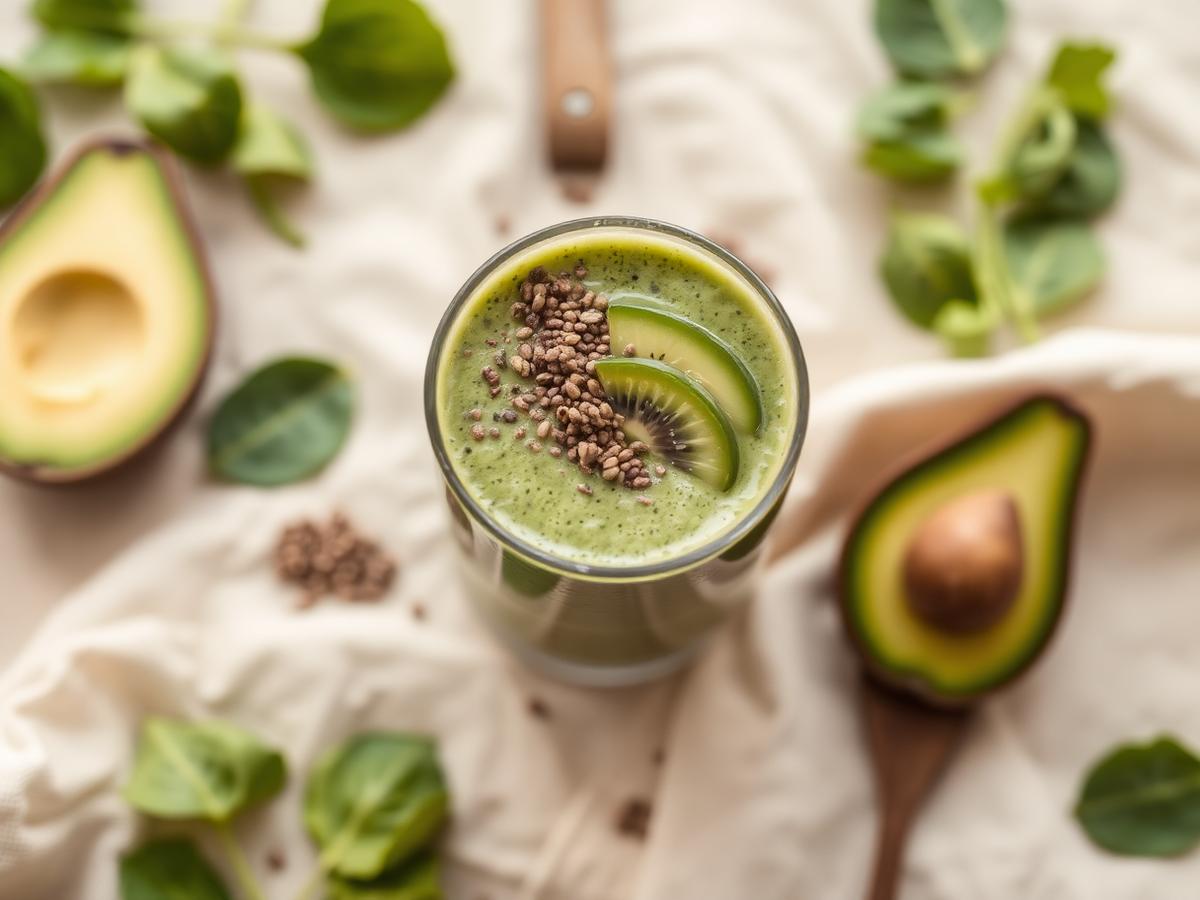
| Breakfast | Green fiber first smoothie | 11 g fiber |
| Lunch | Tuscan white bean and kale soup | 13 g fiber |
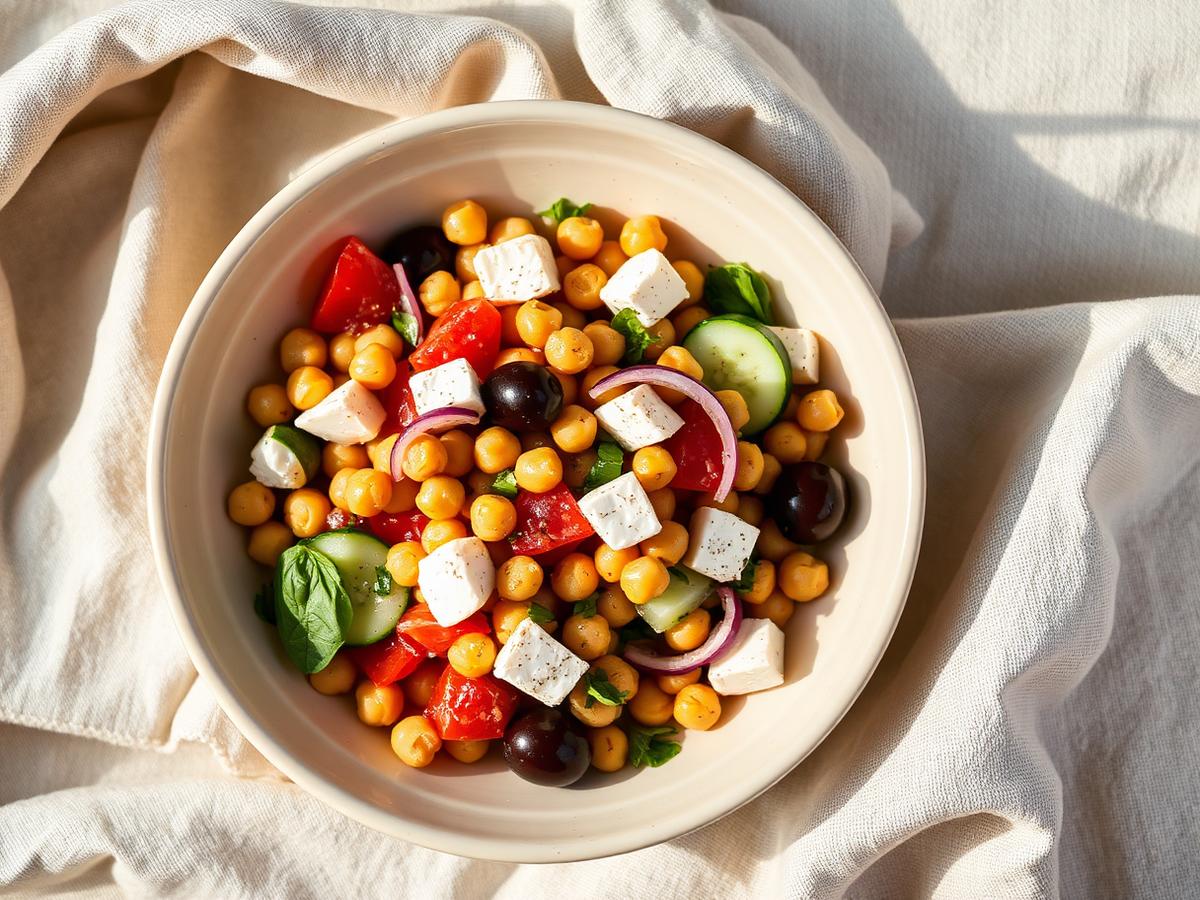
| Lunch | Chickpea Greek salad with feta | 12 g fiber |
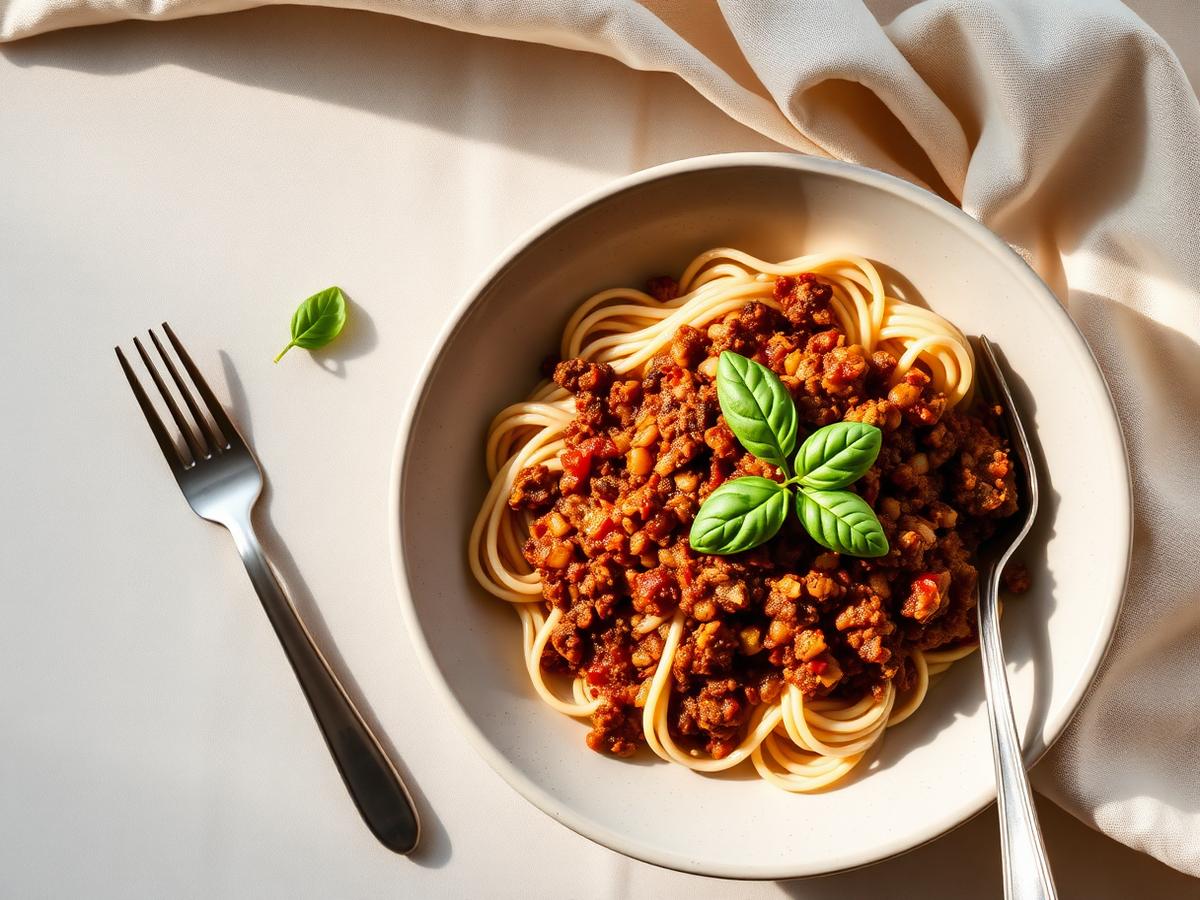
| Dinner | Lentil walnut bolognese | 15 g fiber |
| Snack | Edamame with sea salt | 8 g fiber |
Aisle by aisle
08The grocery shopping guide
Fiber is a shopping habit before it is an eating habit. If these items are in the house, you will hit 30 g without thinking about it. If they are not, no amount of intention will save the week.
- Read the label for fiber per 100 g, not per serving. Serving sizes are marketing.
- Aim for 6 g of fiber per 100 g in a bread or cereal. Most fall well short.
- Ingredients list first word should be wholegrain, not wheat flour.
| Aisle | Buy these | Why |
|---|---|---|
| Canned goods | Lentils, chickpeas, black beans, white beans, chopped tomatoes | The single fastest fiber in the shop, no soaking required |
| Grains | Rolled oats, barley, quinoa, brown rice, seeded wholegrain bread | Breakfast and the base of every bowl |
| Seeds and nuts | Ground flaxseed, chia, pumpkin seeds, walnuts, almonds, pistachios | Two tablespoons of ground flax is 5.6 g on autopilot |
| Produce | Onions, garlic, leeks, broccoli, carrots, courgette, dark greens, sweet potato | Prebiotic base plus everyday volume |
| Fruit | Raspberries, blackberries, pears, apples, slightly green bananas, frozen berries | The easiest evening fiber there is |
| Fridge | Kefir, live yogurt, kimchi, sauerkraut, hummus, edamame | Fermented foods and instant snacks |
| Freezer | Frozen peas, spinach, mixed berries, edamame | Fiber that never goes off |
Put it on the plate
Your first week
- 1.Track your fiber for three days with any app, you need a baseline, not perfection.
- 2.Put a can of lentils or beans into one meal every day this week.
- 3.Buy ground flaxseed and keep it in the fridge with a tablespoon in the bag.
- 4.Add two glasses of water a day as you add fiber.
- 5.Cook one high-fiber batch recipe on Sunday so the target is automatic.
Cook the guide
Recipes that fit this plan.


Questions we get asked
- Should I use a fiber supplement?
- Psyllium is genuinely useful for regularity and cholesterol and is a reasonable addition. It is not a substitute, supplements miss the polyphenols, minerals, and microbial variety that whole plants deliver.
- I get bloated whenever I eat beans.
- Start with a quarter cup, rinse canned beans well, and increase weekly. Most people tolerate them comfortably within three to four weeks as the microbiome adapts.
- Does cooking destroy fiber?
- No. Cooking softens fiber and can even increase resistant starch when you cool starches afterward.
- Can I go above 30 grams?
- Many people comfortably eat 35 to 40 g. Beyond that the benefits flatten and mineral absorption can suffer slightly, so treat 30 g as the target and anything more as a bonus, not a goal.
Thirty grams a day is not a diet. It is a shopping habit, legumes in the cupboard, flax in the fridge, fruit on the counter.
Keep it forever
Download the full The Fiber Fix PDF.
The complete 18-page PDF, designed, printable, and yours to keep. Everything on this page plus the charts, plans and checklists laid out for the fridge door.
- Print-ready 18-page PDF
- Charts, plans and grocery lists included
- Free, your details unlock every guide
Read next